

Baby Products Industry to Surpass USD 533.5 Billion by 2035 Driven by Growing Demand for Premium Baby Care
Baby Products Market
Baby Products Market is currently experiencing a dynamic evolution, driven by shifting consumer preferences and increasing awareness regarding child safety.
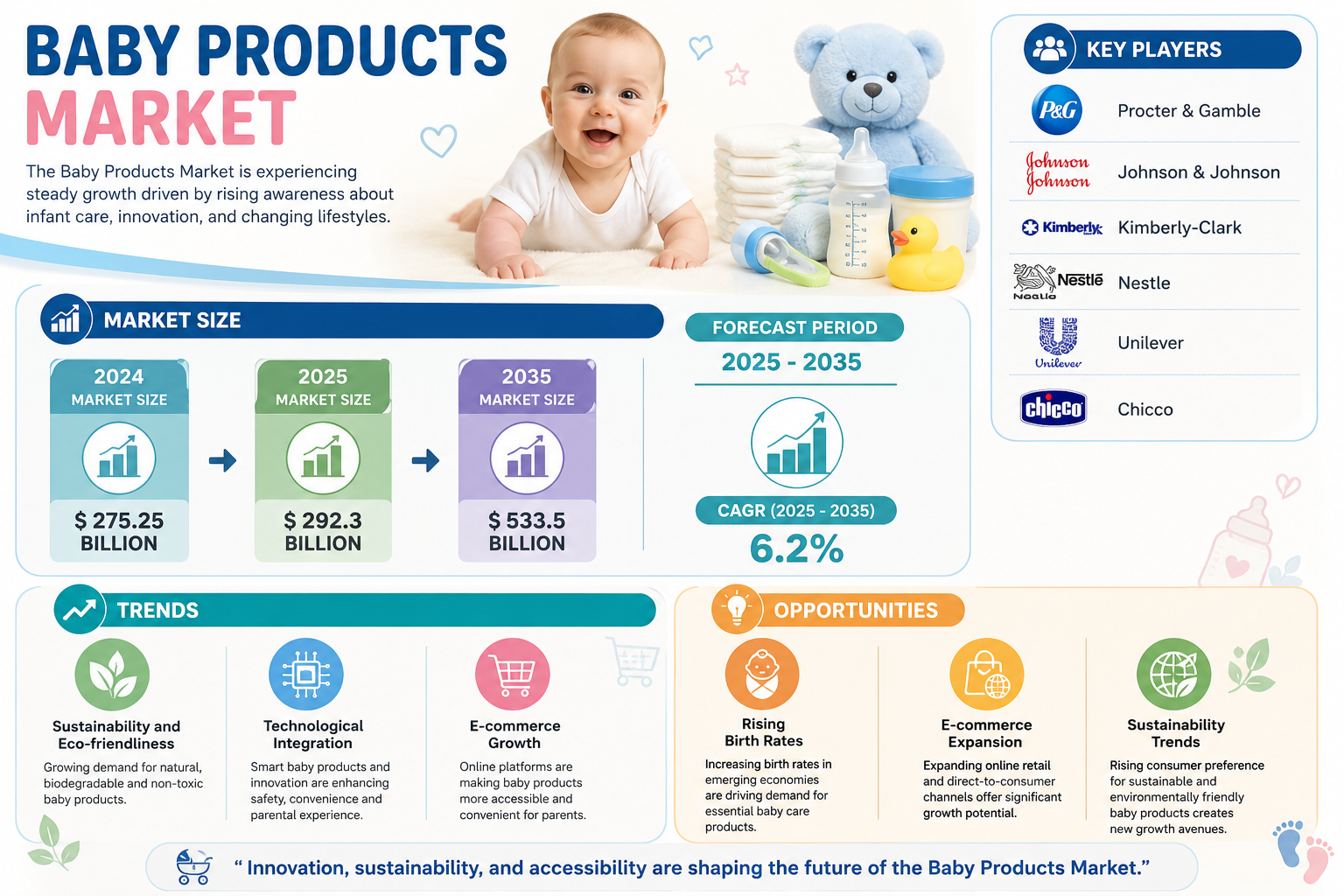
NEW YORK, NY, UNITED STATES, June 29, 2026 /EINPresswire.com/ -- The global Baby Products Market is witnessing remarkable growth as changing parenting preferences, increasing spending on child wellness, and rising demand for innovative and sustainable products continue to reshape the industry. The market was valued at USD 275.25 billion in 2024 and is estimated to increase to USD 292.3 billion in 2025. Looking ahead, the industry is projected to reach approximately USD 533.5 billion by 2035, registering a compound annual growth rate (CAGR) of 6.2% during the forecast period from 2025 to 2035.The market's steady expansion reflects the growing importance of infant health, safety, nutrition, and comfort among parents worldwide. Rising disposable incomes, urbanization, and increasing awareness regarding high-quality baby care products are encouraging consumers to invest more in products that support early childhood development and well-being.
Market Overview:
The baby products industry encompasses a broad range of products designed specifically for infants and toddlers, including baby food, diapers and wipes, clothing, baby gear, and health and safety products. The market has evolved considerably over the past decade, moving beyond basic childcare necessities toward technologically advanced, environmentally sustainable, and premium offerings.
Modern parents are increasingly informed and selective regarding the products they purchase for their children. Product quality, ingredient safety, organic materials, and sustainability credentials have become critical purchasing factors. This shift in consumer behavior has encouraged manufacturers to develop products that combine safety, convenience, and innovation.
Furthermore, increasing awareness regarding infant hygiene, nutrition, and developmental needs has created substantial opportunities for manufacturers across various product categories.
Market Drivers:
Rising Birth Rates in Emerging Economies
Although birth rates have slowed in several developed nations, many emerging economies continue to experience stable or growing infant populations. Countries across Asia-Pacific, Latin America, and parts of the Middle East and Africa are witnessing increasing demand for baby care essentials, creating a significant consumer base for manufacturers.
Increasing Disposable Income
Growing household incomes are enabling parents to spend more on premium baby products. Consumers are increasingly willing to invest in high-quality baby foods, organic clothing, advanced monitoring devices, and premium hygiene products that offer superior comfort and safety.
Growing Awareness of Infant Health and Hygiene
Parents today have greater access to information regarding infant care and development. Awareness campaigns and digital media have highlighted the importance of proper nutrition, hygiene, and safety, encouraging consumers to choose specialized baby products that support healthy growth.
Expansion of E-Commerce Platforms
The rapid growth of online retail channels has transformed the baby products industry. Digital marketplaces provide parents with access to a wide range of products, detailed product information, and customer reviews, making purchasing decisions easier and more convenient.
Download Free Sample PDF Copy : – Access A Complimentary Copy of Our Report to Explore Its Content and Insights
https://www.marketresearchfuture.com/sample_request/25637
Smart Technology Reshaping the Industry:
One of the most significant opportunities in the Baby Products Market is the integration of smart technologies into infant care products. Connected baby monitors, smart thermometers, wearable tracking devices, and AI-powered monitoring systems are changing how parents monitor and care for their children.
These technologies provide real-time information on sleep patterns, room temperature, breathing, and movement, offering parents greater peace of mind. Smart baby products also support remote monitoring through smartphone applications, enabling parents to stay connected with their children even when away from home.
The growing adoption of digital parenting solutions is expected to create substantial opportunities for manufacturers over the next decade.
Sustainability and Eco-Friendly Product Trends:
Environmental concerns are increasingly influencing purchasing decisions in the baby products industry. Modern parents are seeking products that are safe for both their children and the environment. This has led to rising demand for organic baby foods, biodegradable diapers, reusable products, and clothing made from natural fibers.
Manufacturers are responding by introducing environmentally responsible packaging, reducing chemical usage, and incorporating sustainable production practices. Companies that successfully align with consumer preferences for sustainability are expected to gain a significant competitive advantage.
The increasing popularity of eco-friendly products is also driving innovation and intensifying competition among market participants.
Market Segmentation:
By Product Type:
The Baby Products Market is segmented into:
▪️Baby Food
▪️Diapers and Wipes
▪️Baby Clothing
▪️Baby Gear
▪️Health and Safety Products
Baby food remains one of the largest segments due to increasing awareness regarding infant nutrition and the growing popularity of organic and fortified food products.
Diapers and wipes continue to generate significant revenue because of their essential nature and frequent usage.
Baby clothing is benefiting from rising consumer interest in premium, organic, and fashionable infant apparel.
Baby gear, including strollers, carriers, and feeding accessories, is experiencing strong demand due to increasing urban lifestyles and convenience-oriented parenting.
Health and safety products, such as baby monitors and medical accessories, are gaining traction as parents prioritize child safety and preventive care.
By Age Group:
Products are designed to meet the specific needs of various developmental stages, ranging from newborns to toddlers. Different age groups require specialized nutrition, clothing, and safety solutions, creating opportunities for highly targeted product offerings.
By Distribution Channel:
The market is segmented into:
▪️Supermarkets and Hypermarkets
▪️Specialty Stores
▪️Online Retail
▪️Convenience Stores
▪️Other Distribution Channels
Online retail has emerged as one of the fastest-growing channels due to convenience, broader product availability, and increasing internet penetration.
By Price Range:
The market includes:
▪️Economy Products
▪️Mid-Range Products
▪️Premium Products
Premium products are witnessing rapid growth as parents increasingly prioritize quality, safety, and specialized features.
By Material:
Manufacturers are increasingly adopting:
▪️Organic Materials
▪️Natural Fibers
▪️Biodegradable Materials
▪️Conventional Materials
Demand for sustainable and non-toxic materials continues to rise globally.
Competitive Landscape and Key Players
The global Baby Products Market is highly competitive and characterized by continuous innovation, product diversification, and strategic expansion initiatives. Companies are increasingly investing in research and development to introduce products that address evolving consumer preferences for safety, convenience, sustainability, and digital connectivity.
Major manufacturers are focusing on premium product launches, acquisitions, partnerships, and geographical expansion strategies to strengthen their market positions. The integration of smart technology and eco-friendly manufacturing practices has become a key competitive differentiator.
Key companies operating in the market include:
▪️Procter & Gamble (US)
▪️Johnson & Johnson (US)
▪️Kimberly-Clark (US)
▪️Nestlé (Switzerland)
▪️Unilever (United Kingdom)
▪️Chicco (Italy)
▪️Pampers (US)
▪️Gerber (US)
▪️BabyBjorn (Sweden)
▪️Munchkin (US)
These companies continue to invest heavily in product innovation, digital engagement strategies, and sustainable manufacturing initiatives to capture growing consumer demand.
Regional Outlook
North America
North America remains one of the largest markets for baby products due to high consumer spending, strong awareness regarding infant health, and the presence of leading global manufacturers. Premium and organic baby products enjoy strong demand throughout the region.
Europe
Europe holds a substantial share of the global market, supported by stringent safety regulations, high product quality standards, and increasing demand for eco-friendly baby products. Sustainability trends are particularly influential across European countries.
Asia-Pacific
Asia-Pacific is expected to witness the fastest growth during the forecast period. Rapid urbanization, rising birth rates in several countries, increasing disposable incomes, and expanding middle-class populations are driving demand for baby products throughout the region.
South America
The South American market is growing steadily due to improving economic conditions and increasing awareness regarding infant nutrition and healthcare.
Middle East & Africa
The Middle East and Africa are emerging as promising markets owing to expanding retail infrastructure, growing urban populations, and rising consumer expenditure on childcare products.
Future Industry Outlook
The future of the Baby Products Market appears highly promising as manufacturers continue to develop products that combine innovation, safety, sustainability, and convenience. Digital transformation and smart parenting technologies are expected to reshape the competitive landscape significantly.
Consumer demand for organic ingredients, environmentally friendly materials, and personalized products is likely to remain a major growth driver throughout the forecast period. Furthermore, increasing investments in research and development and expanding e-commerce channels will create new growth opportunities for market participants worldwide.
As parenting preferences evolve and technology becomes increasingly integrated into childcare, the global Baby Products Market is expected to maintain strong growth momentum and emerge as one of the most dynamic consumer goods industries over the coming decade.
Frequently Asked Questions?
What is the projected size of the Baby Products Market by 2035?
The global Baby Products Market is expected to reach approximately USD 533.5 billion by 2035.
What is the expected CAGR of the Baby Products Market during 2025-2035?
The market is anticipated to grow at a CAGR of 6.2% during the forecast period.
Which factors are driving the growth of the Baby Products Market?
Key growth drivers include rising disposable incomes, increasing awareness of infant health and hygiene, growing demand for eco-friendly products, and the integration of smart technologies in baby care products.
Which region is expected to experience the fastest market growth?
The Asia-Pacific region is projected to record the fastest growth due to urbanization, rising incomes, and expanding demand for premium baby products.
Read Our Related Research Report:
Baby Monitor Market:
https://www.marketresearchfuture.com/reports/baby-monitor-market-22937
Baby Shoe Market:
https://www.marketresearchfuture.com/reports/baby-shoe-market-25659
Baby Wipes Market:
https://www.marketresearchfuture.com/reports/baby-wipes-market-7298
Baby Oral Care Market:
https://www.marketresearchfuture.com/reports/baby-oral-care-market-11630
Baby Safety Products Market:
https://www.marketresearchfuture.com/reports/baby-safety-products-market-11634
Sagar Kadam
Market Research Future
+ +1 628-258-0071
email us here
Visit us on social media:
LinkedIn
Facebook
YouTube
X
Legal Disclaimer:
EIN Presswire provides this news content "as is" without warranty of any kind. We do not accept any responsibility or liability for the accuracy, content, images, videos, licenses, completeness, legality, or reliability of the information contained in this article. If you have any complaints or copyright issues related to this article, kindly contact the author above.
