

Metabo Drops 2026: Is It Legit? Ingredients, Safety Facts, and Consumer Analysis
Consumer searches for supplement legitimacy increased 26% year-over-year as transparency becomes central purchasing criterion — industry analysis examines what drives "Is It Legit?" search behavior and how liquid delivery formats are reshaping the category.
NASHVILLE, TN, Jan. 12, 2026 (GLOBE NEWSWIRE) -- Disclaimer: This article is for informational purposes only and does not constitute medical advice. Always consult a qualified healthcare professional before starting any new supplement. This article contains affiliate links. If you purchase through these links, a commission may be earned at no additional cost to you.
Legitimacy Searches Signal New Phase in Supplement Consumer Behavior
A measurable shift in dietary supplement consumer research patterns is reshaping how products reach market heading into 2026. According to analysis of search trend data, legitimacy-focused queries — searches containing terms like "legit," "real," "scam," or company verification language — have increased significantly as consumers prioritize due diligence over impulse purchasing in the estimated $103 billion global weight management supplement market.
This behavioral shift represents a departure from traditional supplement search patterns. Rather than searching for "best" or "top" products, a growing segment of consumers now leads with skepticism, conducting verification research before engaging with product-specific content or pricing information.
The pattern is particularly pronounced in emerging supplement categories, including liquid serum delivery formats designed for beverage integration. As these newer formats gain market presence, consumer verification behavior intensifies — creating both challenges and opportunities for brands operating in this space.
View the current Metabo Drops offer (official Metabo Drops page)
Market Data: Quantifying the Transparency Trend
The legitimacy-first research pattern reflects broader changes in how consumers approach supplement purchases.
According to analysis of Google Trends data from May through July 2025 published by health platform Hers, weight loss-related search interest increased over 26% year-over-year. Tennessee led all U.S. states in cumulative search volume across weight loss categories, followed by Alabama, Kentucky, and other Southeastern states.
Within this growth, legitimacy-related query subsets — searches combining product names with verification language — represent an expanding share of total category volume. Market analysts attribute this pattern to several converging factors:
Regulatory framework awareness has increased among supplement consumers. Understanding that dietary supplements do not require pre-market FDA approval for safety or efficacy, consumers increasingly recognize that verification responsibility falls to them rather than regulatory agencies.
Market proliferation continues accelerating. The weight management supplement category has expanded rapidly, with new products, formats, and market entrants competing for consumer attention. This proliferation creates uncertainty about how to distinguish between offerings without conducting individual research.
Social media advertising exposure has transformed consumer discovery patterns. Direct-to-consumer supplement marketing through social platforms increases consumer exposure to unfamiliar brands, triggering verification searches as a response to novel product encounters.
Liquid Delivery Formats: Category Growth Meets Heightened Scrutiny
The liquid supplement delivery segment exemplifies how emerging categories attract intensified consumer verification behavior.
Liquid formats have gained market presence as alternatives to traditional capsules and powders, with manufacturers positioning them as offering different absorption characteristics and usage convenience. Coffee add-in supplements specifically target consumers seeking to integrate supplementation with existing morning routines.
According to industry data, the broader supplement market continues expanding, with natural and plant-based formulations capturing increased market share. The liquid format segment, while representing a smaller portion of total category volume than capsules and powders, has attracted new market entrants and corresponding consumer research activity.
Products in this category typically share common characteristics that generate legitimacy-focused searches:
Delivery format positioning — Manufacturers often describe liquid formats as offering absorption characteristics that differ from powder or capsule alternatives. These represent positioning statements; absorption varies between individuals and delivery mechanisms.
Proprietary blend structures — Many liquid supplements use proprietary formulations that disclose ingredient names and total blend weights but not individual ingredient amounts. This practice, while legal and common across the supplement industry, limits consumer ability to compare dosing to published research.
Manufacturing credential claims — Products frequently reference FDA-registered facilities and GMP certification. Consumer education around what these credentials actually indicate — facility registration and manufacturing standards, not product efficacy approval — drives verification search behavior.
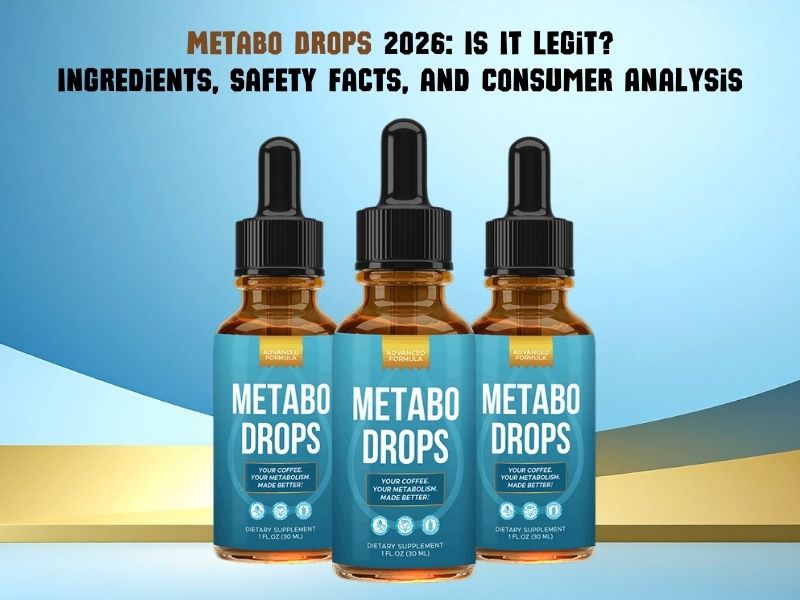
Metabo Drops, a coffee add-in liquid supplement marketed within this category, illustrates these characteristics. The product uses a 550 mg proprietary blend containing green tea leaf extract, green coffee bean extract, L-Carnitine, and L-Theanine, with full disclosure on vitamin and mineral components (Vitamin D at 20 mcg, Vitamin B6 at 1 mg, Vitamin B12 at 5 mcg, Chromium at 20 mcg). The company references US-based, FDA-registered, GMP-certified manufacturing and lists ClickBank as the retailer of record. Customer support is accessible via support@metabodrops.com, with a stated 60-day refund policy (consumers should verify current terms directly on the official website). This combination of proprietary blend structure, manufacturing credential claims, and third-party retailer infrastructure is typical of the liquid supplement segment and generates the verification research behavior observed across the category.
What Consumers Evaluate: Transparency Criteria Across the Category
Consumer legitimacy research across the supplement category typically focuses on several distinct evaluation areas. Understanding these criteria provides insight into what drives verification behavior regardless of specific product or format.
Ingredient Disclosure Assessment
Consumers evaluating supplement legitimacy typically assess ingredient transparency levels:
Full disclosure formulas list all ingredients with specific amounts, allowing consumers to compare dosing to published research and evaluate cost-per-ingredient value.
Proprietary blend formulas disclose ingredient names and total blend weight but not individual amounts. This structure, while legal and common, limits consumer verification ability and drives additional research behavior.
The distinction matters because published ingredient research examines specific doses under controlled conditions. Without individual ingredient amounts, consumers cannot determine whether a product's formulation aligns with studied doses.
Manufacturing Credential Interpretation
Manufacturing claims represent another evaluation focus, with consumer education around credential meaning driving search activity:
FDA registration indicates a facility is registered with the FDA and subject to inspection. It does not indicate FDA approval of specific products manufactured at that facility.
GMP certification indicates adherence to Good Manufacturing Practices governing production quality and consistency. It relates to manufacturing standards, not product efficacy.
Third-party testing provides independent verification of ingredient identity and purity. Not all supplements offer third-party testing certification, and presence or absence of such certification drives consumer verification behavior.
View the current Metabo Drops offer (official Metabo Drops page)
Company Accessibility Verification
Consumer legitimacy research increasingly includes company accessibility evaluation:
Contact information availability — Whether customer support contact methods are published and accessible before purchase.
Refund policy clarity — Whether return and refund terms are clearly stated and can be verified independently.
Retailer transparency — Whether the purchase process uses recognized payment infrastructure with established dispute resolution mechanisms.
The Critical Distinction: Legitimacy vs. Efficacy
Consumer education increasingly emphasizes a critical point: legitimacy criteria differ from efficacy evidence.
A product can meet standard legitimacy criteria — proper labeling, manufacturing credentials, company accessibility, transparent policies — while still producing variable results across different consumers. Dietary supplements are regulated as food products and are not required to demonstrate efficacy through clinical trials.
Legitimacy evaluation helps consumers assess transparency and company credibility. It does not predict individual outcomes — a distinction that drives continued consumer education and research behavior across the category.
Ingredient Research: What Published Studies Actually Examine
Consumer verification behavior often includes ingredient research against published scientific literature. Understanding research context helps consumers interpret ingredient claims appropriately across any supplement product.
Research Application Limitations
Published research on supplement ingredients carries important context that shapes consumer interpretation:
Studies examine isolated ingredients under controlled conditions with specific doses, populations, and methodologies. Findings describe observations within those parameters.
Finished product formulations typically lack independent study. Most dietary supplements have not undergone clinical trials as finished products — research exists for individual ingredients, not specific product combinations.
Dose comparison requires disclosure. When products use proprietary blends, consumers cannot compare product doses to research study doses, limiting the applicability of ingredient research to product evaluation.
Common Ingredient Categories
Ingredients commonly found in liquid weight management supplements have been examined in peer-reviewed literature:
Vitamin D — Research published in the New England Journal of Medicine examines physiological roles and deficiency implications.
B Vitamins — Research in journals including the Journal of Nutrition and Nutrients examines B6 and B12 metabolic functions.
Green Tea Extract — Research in the International Journal of Obesity examines green tea compounds under controlled conditions.
Amino Acids — Research in Nutrients and other journals examines compounds like L-Theanine and L-Carnitine under various study conditions.
These studies evaluate individual ingredients under controlled research conditions. They provide context for understanding ingredient properties; they do not establish effects of any finished product formulation.
View the current Metabo Drops offer (official Metabo Drops page)
Industry Response: Adaptation to Verification-First Consumers
The rise in legitimacy-focused consumer research has prompted measurable industry responses across manufacturing, marketing, and transparency practices.
Transparency Acceleration
Some supplement manufacturers have responded to legitimacy concerns by increasing disclosure practices:
Formula transparency initiatives — Movement away from proprietary blends toward complete ingredient amount disclosure in some product lines.
Third-party certification adoption — Increasing use of independent testing verification for ingredient identity and purity, with certification badges featured prominently in marketing.
Manufacturing documentation — More detailed public information about facility certifications, quality control processes, and supply chain verification.
Marketing Evolution
Supplement marketing increasingly addresses legitimacy questions directly rather than avoiding them:
Proactive verification content — Brand-published content addressing common consumer questions about company credibility, ingredient sourcing, and manufacturing standards.
Policy prominence — Satisfaction guarantees and return policies featured prominently to reduce perceived purchase risk.
Accessibility emphasis — Customer support availability and responsiveness highlighted as trust indicators.
Structural Challenges Persist
Despite industry adaptation, legitimacy concerns persist due to category-wide structural factors:
Regulatory framework — The dietary supplement regulatory structure places verification responsibility on consumers rather than requiring pre-market efficacy demonstration. This framework drives ongoing consumer research behavior regardless of individual brand transparency efforts.
Market velocity — Continuous new market entrants make comprehensive consumer research challenging, sustaining verification behavior as a persistent category characteristic.
Claim interpretation complexity — Marketing language often emphasizes ingredient research without clearly distinguishing between ingredient studies and finished product evidence, requiring consumer education and critical evaluation.
Consumer Framework: Evaluation Criteria for Any Supplement
For consumers conducting legitimacy research on dietary supplements, the following framework provides evaluation structure applicable across products and categories.
Verification Starting Points
Assess ingredient disclosure level — Determine whether formulas provide full ingredient amounts or use proprietary blends that limit verification ability. Full disclosure enables research comparison; proprietary blends require additional trust assumptions.
Interpret manufacturing claims accurately — Understand what credentials indicate. FDA registration means facility registration and inspection eligibility, not product approval. GMP certification relates to manufacturing consistency, not product efficacy.
Verify company accessibility — Confirm that customer support contact methods are accessible and that refund policies are clearly stated before purchase. Established retailers with dispute resolution mechanisms provide additional consumer protection.
Engage healthcare professionals — Discuss supplementation with qualified healthcare providers, particularly when taking medications or managing health conditions. Professional guidance supplements but does not replace consumer research.
Expectation Calibration
Separate legitimacy from efficacy — Meeting transparency criteria does not predict individual outcomes. Supplement responses vary between individuals based on numerous factors.
Recognize regulatory context — Dietary supplements do not require pre-market FDA approval for safety or efficacy. Consumer research serves as the primary verification mechanism in this regulatory environment.
Evaluate marketing claims critically — Ingredient research findings describe controlled study observations. They provide context but do not guarantee finished product effects for any individual consumer.
Outlook: Legitimacy Research as Permanent Category Feature
The rise in "Is It Legit?" search behavior reflects consumers taking active roles in supplement verification — a rational response to a market structure that places due diligence responsibility on purchasers.
This behavioral pattern shows no indication of reversal. As the supplement market continues expanding and new formats like liquid delivery systems gain presence, consumer verification behavior intensifies correspondingly. Products entering emerging categories will continue generating legitimacy-focused research as standard market response.
For the supplement industry, this trend creates competitive pressure toward transparency. Brands that proactively address legitimacy criteria may capture consumer trust more effectively than those requiring consumers to conduct extensive independent verification.
For consumers, legitimacy research represents a valuable component of supplement evaluation. Understanding what transparency criteria to assess — and maintaining the critical distinction between legitimacy and efficacy — supports informed decision-making in a category where regulatory oversight differs significantly from pharmaceutical markets.
This analysis examines industry trends, consumer behavior patterns, and evaluation frameworks based on publicly available market data and general category characteristics. It does not constitute product endorsement, verify individual product performance, or replace consultation with qualified healthcare professionals.
View the current Metabo Drops offer (official Metabo Drops page)
Disclaimers
FDA Health Disclaimer: These statements have not been evaluated by the Food and Drug Administration. Dietary supplements are not intended to diagnose, treat, cure, or prevent any disease. Always consult your physician before starting any new supplement, especially if you have existing health conditions, take medications, or are pregnant or nursing.
Professional Medical Disclaimer: This article is educational and does not constitute medical advice. If you currently take medications, have existing health conditions, are pregnant or nursing, or are considering major changes to your health regimen, consult your physician before starting any new supplement.
Results May Vary: Individual results vary based on factors including age, baseline health condition, lifestyle factors, consistency of use, genetic factors, current medications, and other individual variables. Results are not guaranteed.
FTC Affiliate Disclosure: This article contains affiliate links. If you purchase through these links, a commission may be earned at no additional cost to you. This compensation does not influence the accuracy, neutrality, or integrity of the information presented.
Pricing Disclaimer: All pricing and policy information referenced was based on publicly available information at the time of publication (January 2026) but is subject to change without notice. Always verify current pricing and terms on official product websites.
Publisher Responsibility Disclaimer: The publisher of this article has made every effort to ensure accuracy at the time of publication. We do not accept responsibility for errors, omissions, or outcomes resulting from use of the information provided.
Ingredient Research Disclaimer: Research citations reference peer-reviewed studies on individual ingredients under controlled conditions. This does not constitute evidence for any finished product formulation.

Email: support@metabodrops.com

Legal Disclaimer:
EIN Presswire provides this news content "as is" without warranty of any kind. We do not accept any responsibility or liability for the accuracy, content, images, videos, licenses, completeness, legality, or reliability of the information contained in this article. If you have any complaints or copyright issues related to this article, kindly contact the author above.
